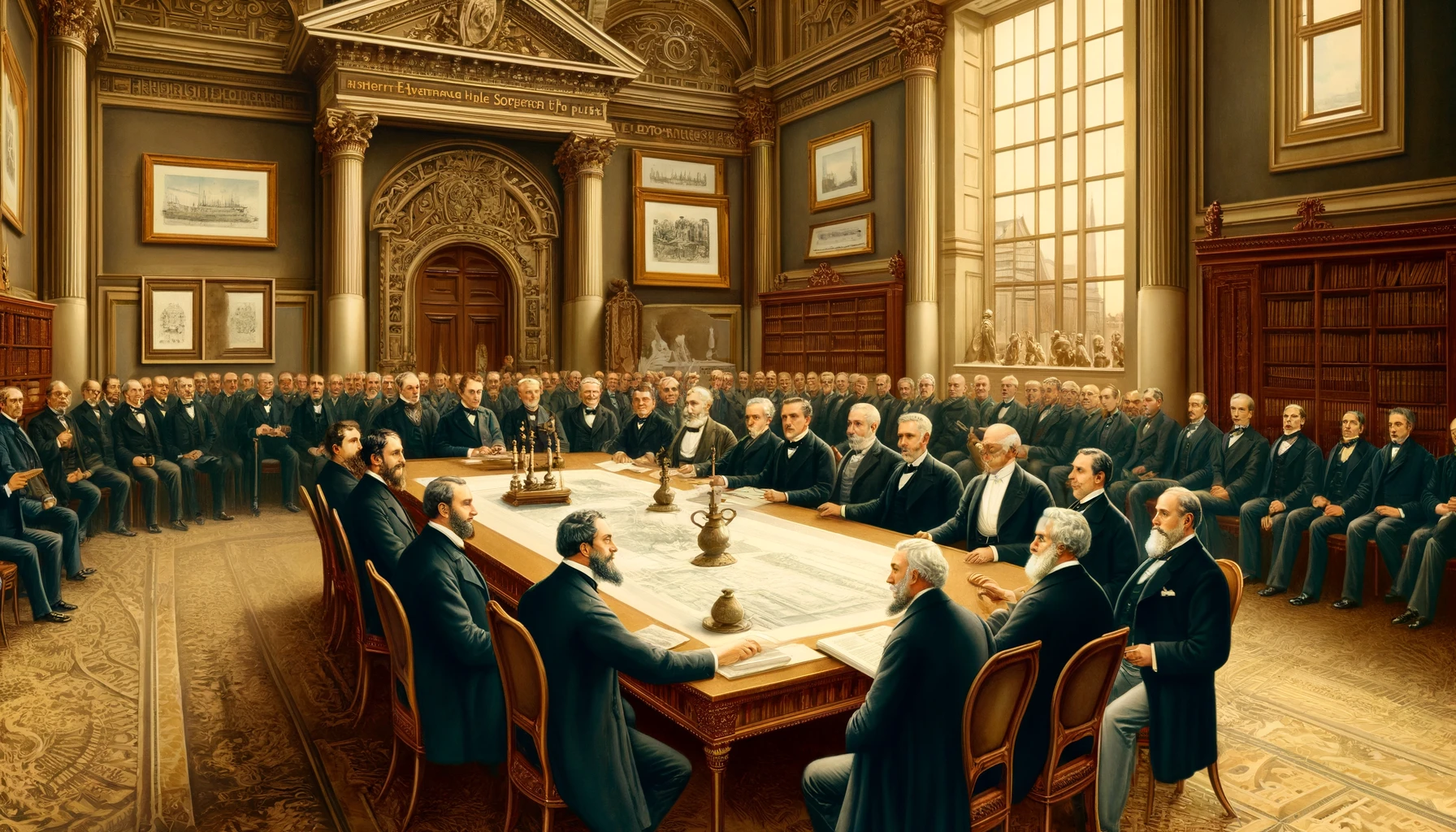
Pioneering the Global Sports Movement and the Birth of the Modern Olympic Games
Historical Background:
On June 23, 1894, a pivotal moment in sports history occurred with the establishment of the International Olympic Committee (IOC) at the Sorbonne in Paris, France. This significant event was spearheaded by Baron Pierre de Coubertin, a French educator and historian, who passionately believed in the revitalizing power of sports. His vision was to promote international peace and understanding through athletic competition. The revival of the Olympic Games, inspired by the ancient Greek tradition, was central to his plan.
The founding of the IOC marked the beginning of the modern Olympic movement. The committee comprised representatives from 12 countries and was tasked with organizing the first modern Olympic Games. The IOC’s formation was influenced by a series of preliminary sports congresses and enthusiastic public support for the idea of international sporting competitions that could bridge cultural and political divides.
The Event’s Impact:
The first modern Olympic Games were held in Athens in 1896, a direct outcome of the IOC’s formation. These games featured 241 athletes from 14 nations, competing in 43 events, and marked a significant step in global sports. Since then, the Olympics have grown to become the world’s foremost sports competition, with more than 200 nations participating.
The establishment of the IOC not only rejuvenated athletic competition but also formalized the rules and standards of international sports. It established a recurring forum for global unity and cultural exchange and promoted values such as fair play, excellence, and respect. The Olympics have since become a powerful platform for promoting international diplomacy and national pride, as well as for challenging societal and racial prejudices.
Related Anecdotes:
- The idea to revive the Olympic Games first came to Pierre de Coubertin in 1889, and it took him several years of advocating for his vision before the formation of the IOC was realized.
- The iconic Olympic Rings, representing the five continents of the world, were introduced by Coubertin in 1913, symbolizing the global reach and unity of the Olympic movement.