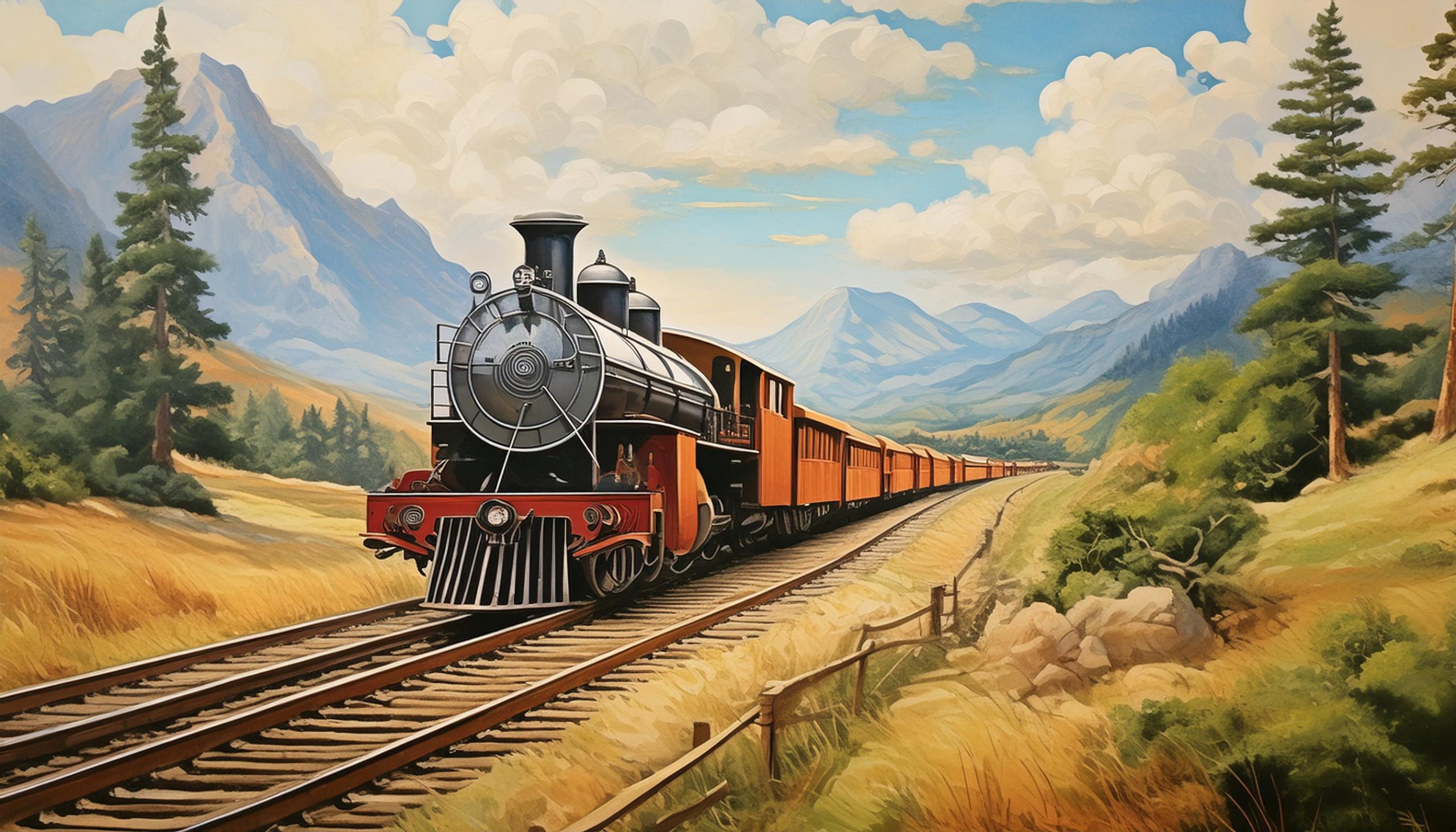
How the Completion of the Transcontinental Railroad on May 10, 1869, Revolutionized Transportation and Commerce in America
On May 10, 1869, a monumental event in American history occurred with the completion of the Transcontinental Railroad. This engineering marvel, which connected the East and West coasts of the United States, fundamentally transformed the nation’s infrastructure, economy, and the very fabric of American society.
Historical Background
The idea of a transcontinental railroad was proposed in the early 19th century as a means to facilitate trade, improve communication, and unify the expanding country. The Pacific Railroad Act of 1862 was passed during the presidency of Abraham Lincoln, which authorized the Central Pacific and the Union Pacific Railroad Companies to construct the lines. The project brought together thousands of workers, including Civil War veterans, newly freed slaves, and a significant number of Chinese laborers, who faced immense challenges and harsh conditions.
Event Impact
The completion of the railroad was marked by the ceremonial “Golden Spike” driven at Promontory Summit, Utah. This event not only symbolized the physical connection of the railway tracks but also the unification of the country from coast to coast. The railroad reduced the travel time across the country from several months to just one week, fostering mobility, migration, and settlement in the West.
The economic impact was profound. It facilitated easier access to markets, reducing costs and increasing speed for goods transport, which in turn stimulated industries like mining, agriculture, and manufacturing. Additionally, the railroad played a crucial role in the post-Civil War reconstruction era, knitting together a nation fractured by conflict and promoting economic recovery and expansion.
Related Anecdotes
- The famous “Last Spike,” also known as the “Golden Spike,” was made of California gold and became a symbol of achievement and national pride.
- The ceremony on May 10 was telegraphed live across the country. When the final spike was driven, telegraph lines transmitted a simple, yet powerful message: “DONE!” This was one of the first nationwide live media events, capturing the imagination of millions.